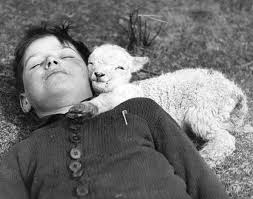
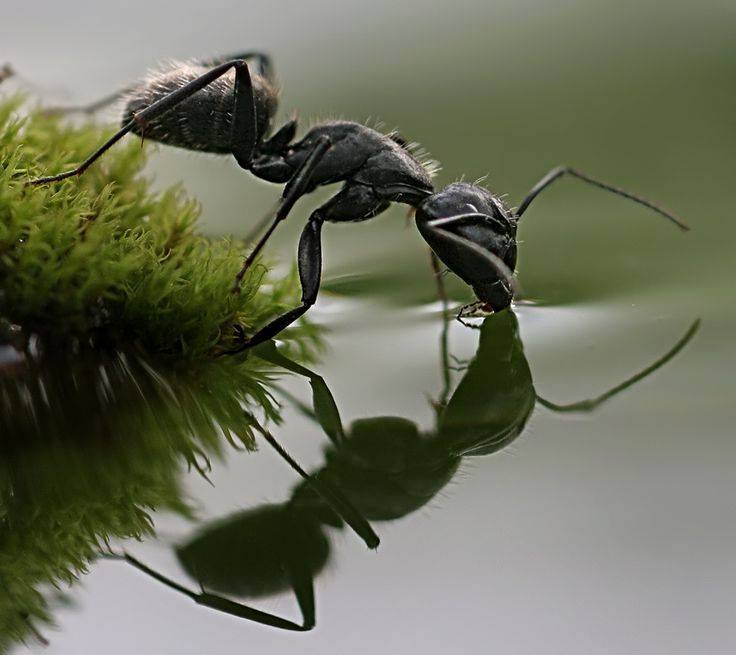
Connecting With Other Animals Acknowledges Our Kinship With Them

End Animal Slaughter contributor LYNLEY TULLOCH reflects on our lack of connectedness with other animals, and how we can turn it around


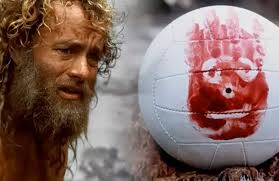
The notion of intimacy, the feeling of closeness and connection, is linked to a sense of belonging. When we connect with others, we feel ourselves as not just a separate being but as one who has a meaningful place among others. Humans are deeply social beings, fragile and vulnerable to being cast adrift. Without each other we are like Tom Hanks on the movie Castaway, slowly going insane, creating a friend out of a volleyball just to feel a sense of connection.


Tom Hanks as The Castaway, and his friend ‘Wilson’ the Volleyball

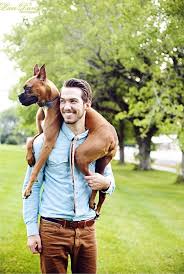
With the exception of few hermits, who have somehow managed to completely detach from every other living being, most of us need each other. And it’s not just humans we seek to connect with. Many people gain an important sense of connection from the non-human animals that share their lives. And many non-human animals such as dogs are reciprocally connected to us, having co-evolved ‘around the campfire’.


Dogs and humans have been evolving together for 32,000 years

Animal species are similar in this regard.   They often live in herds or colonies with varying levels of complexity. They may also associate with animals of other species if it is mutually beneficial. Some species may have a predatory relationship with other species – but as Mathew Ricard (author of ‘A Plea for the Animals’)  says, the vast majority of animals will largely ignore other species. Mostly non-human animals will exist peacefully together.

Interdependence refers to the way all animals, including humans, have evolved together in a vast and intricate ecological web. I can’t pretend to be an ecologist, and I will leave the deep knowledge around the systems in the biosphere to them, but when thinking about our place on Earth one thing remains clear. We not only need humans, but also non-human animals to not only survive, but to thrive.

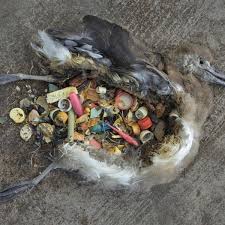
Yet our current relationship with nonhuman animals is deeply malevolent. We trash their homes with the ease of erasing a picture from a blackboard; cutting down rainforests, draining wetlands, burning scrub lands and damning rivers, mining the Earth and the sea beds.  At times we even reverse the course of a river’s flow for human advantage, such is our sense of entitlement. We pollute the homes of animals with plastics and other rubbish, as well as industrial waste.


A young seabird with the contents of its stomach

And then when it all gets too much, when we have had enough shopping in malls,  we go into nature to reconnect!   Intuitively we know how far we have come from ourselves, from our kinship with those around us. The sense of intimacy we need with nature is as important to us as our relationship with other humans.

A recent study has shown that humans make up 0.01% of all life, but have destroyed 83% of wild mammals… 60% of all mammals on Earth are now farmed.

It is hard to deny that we have lost our way as a species. A recent study has shown that humans make up 0.01% of all life, but have destroyed 83% of wild mammals. Conversely, domesticated farm animals kept by humans such as cattle, sheep, goats, pigs and so on abound. The same study demonstrated that 60% of all mammals on Earth are now farmed.

The relationship between the farmer and the farmed animal is one of exploitation and betrayal from the outset.

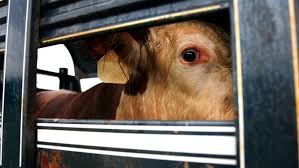
To make matters worse, farmed animals are the most abused on Earth. Kept in varying degrees of captivity they have become completely reliant on the people who farm them. However, the relationship between the farmer and the farmed animal is one of exploitation and betrayal from the outset. Despite declaring a love for the animals in their care, farmers ultimately send them to be killed at a mere fraction of their lives.


Farmers raise cattle who come to depend on them, then they send them to slaughter

Our dependence as a species on the flesh and secretions of our kin (nonhuman animals) is frankly disturbing. The integrity of the nonhuman animal kept on farms is considered at best in welfare terms. They are given no agency and limited freedom (in a narrow sense of the word). Policy speak and legal requirements for their welfare can serve to obscure the hell they live in. Despite increasing access to video footage from farms showing the exploitative and cruel conditions farm animals are subject to, many humans continue to seek justification for farming and eating animals and their products.

In general, we don’t like to identify with the side of the oppressor. Yet sometimes it is hard to see, hard to accept, that we are the oppressor simply by participating in the malevolent order that has been created. By eating meat, for example, we are saying that it is acceptable to farm a sentient being for their flesh. We are saying we are fine with being the 0.01 % of Earth that chooses to incarcerate and exploit all other nonhuman animals.

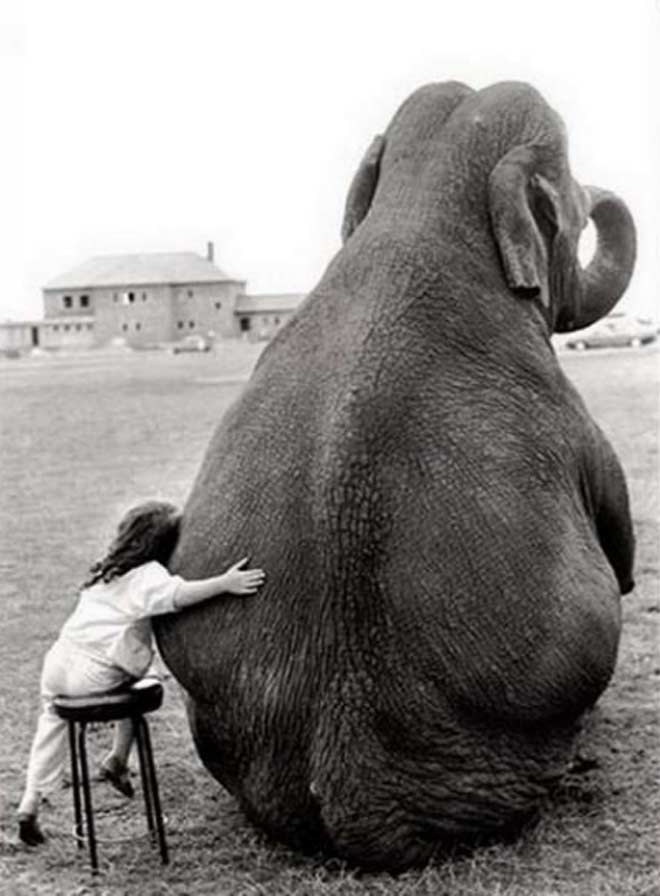
It is time to rethink our relationship with nonhuman animals and see them in terms of kinship rather than ‘the other’. Only then will we feel the true sense of intimacy with animals, one based on love and compassion. Only then will we have a life worth living.


Slaughterhouses of the Sea Series: 1: Death by Bombing

End Animal Slaughter contributor LYNLEY TULLOCH briefly outlines cruel and unsustainable fishing practices.  

No 1: Death by Bombing

When we think of slaughterhouses we think of a building encased within impenetrable walls, a place where the unseemly happenings inside are hidden from public view, where land animals go to be killed for our consumption.    But what about the trillions of fishes killed every year? How are they killed en masse? What are the watery slaughterhouses that we also know so little about?

Commercial and small business fisheries use a range of methods to kill fishes, and all of them result in extremely painful and drawn out deaths. What we do to fishes and other sea creatures, who are every bit as sentient as you and I, is nothing short of torture.  In this series I will give a short outline of some of the cruel and unsustainable fishing practices used worldwide.

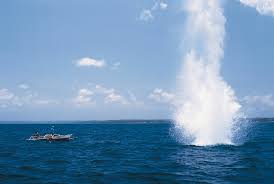
Blast fishing is one of the most unsustainable and cruel methods of killing huge schools of fish for easy collection. This mostly illegal practice has been happening for decades, causing lively colourful coral reefs, the underlying habitat that supports fishes and other organisms, to turn into desolate grey graveyards. It has been widespread in Indonesia, Malaysia, Lebanon, the Philippines, areas of the Pacific, and Tanzania. All that is needed is a plastic bottle and some dynamite and the fish are killed in the hundreds.

Tanzania, however, is the only country where blast fishing is still widespread. Explosives have become readily available due to a construction and mining boom (excuse the pun). A report released in 2016 recorded more than 300 explosions in 30 days, from the Kenya-Tanzania border down to Mozambique. The report concluded that “given the scale of blast fishing, the environmental impact on fisheries, coral reefs and cetaceans is likely to be substantial.”

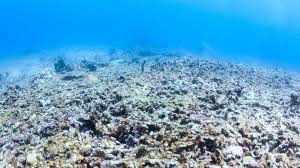
Traditional methods of fishing in Tanzania included basket traps and hook and line. However, lucrative tuna are more easily caught by blowing them out of the water.  Gill Braulik , Director of Cetacean Program Tanzania, says that the explosion causes a pressure wave  in the seas killing everything within a few meters. It kills not only adult fish but also juveniles and any other sea life in the vicinity including corals and turtles. It reduces the three-dimensional reef structure, an important ecological habitat for living,  spawning and feeding, to a one dimensional rubble, affecting the biodiversity of the entire area.

A coral reef destroyed by blast fishing

Yet the Minister for Livestock and Fisheries Development, Mr Luhaga Mpina calls for an increase in ‘fish production’ in 2019 to meet demand from an increase in population growth and tourists. He said that in 2016 Tanzania was compelled to import 13.92 million kilograms of fish in 2016 to meet local demand. Despite being a signatory to the United Nations sustainable development goals, Mr Mpina blithely ignores Goal 14: Life Below Water.  Mr Mpina suggests that Tanzania has  2,736,248 tons of harvestable fish in the oceans and lakes. He is calling for more and not less fishing. Let that sink in (again, excuse the pun).

Economic imperative is the driving force behind the killing of fish by blasting them from their salty water homes direct to a dinner plate.   Some may also sink unseen and unknown to the bottom of the rubbly ocean floor, along with other victims.    The loss is unimaginable.

Blasting fish out of the water dead, or gasping their last breaths, is just one method of destroying the life of fishes.   Our ocean kin are casualties of violence against the innocent and helpless.   It can only be described as a War, one with no rules of engagement.

Mental Illness in Animals


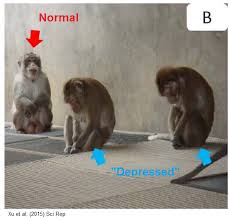
It seems self-evident that animals, who suffer from the same physical diseases as we do, can also suffer from similar mental disorders.   Post Trauma Stress Disorder, Obsessive Compulsive Disorder, Self-harm, Anxiety, Depression have all been studied in animals in the wild and especially in captivity.    If you want to know how animals feel begin by asking yourself:   How would I feel without freedom to express my natural instincts, with extreme boredom and confinement, with trauma and loss…..?  

Read the BBC Earth article by SHREYA DASGUPTA here:


THAILAND’S SHAME IS TYPICAL OF SOUTH EAST ASIAN SLAUGHTERHOUSES

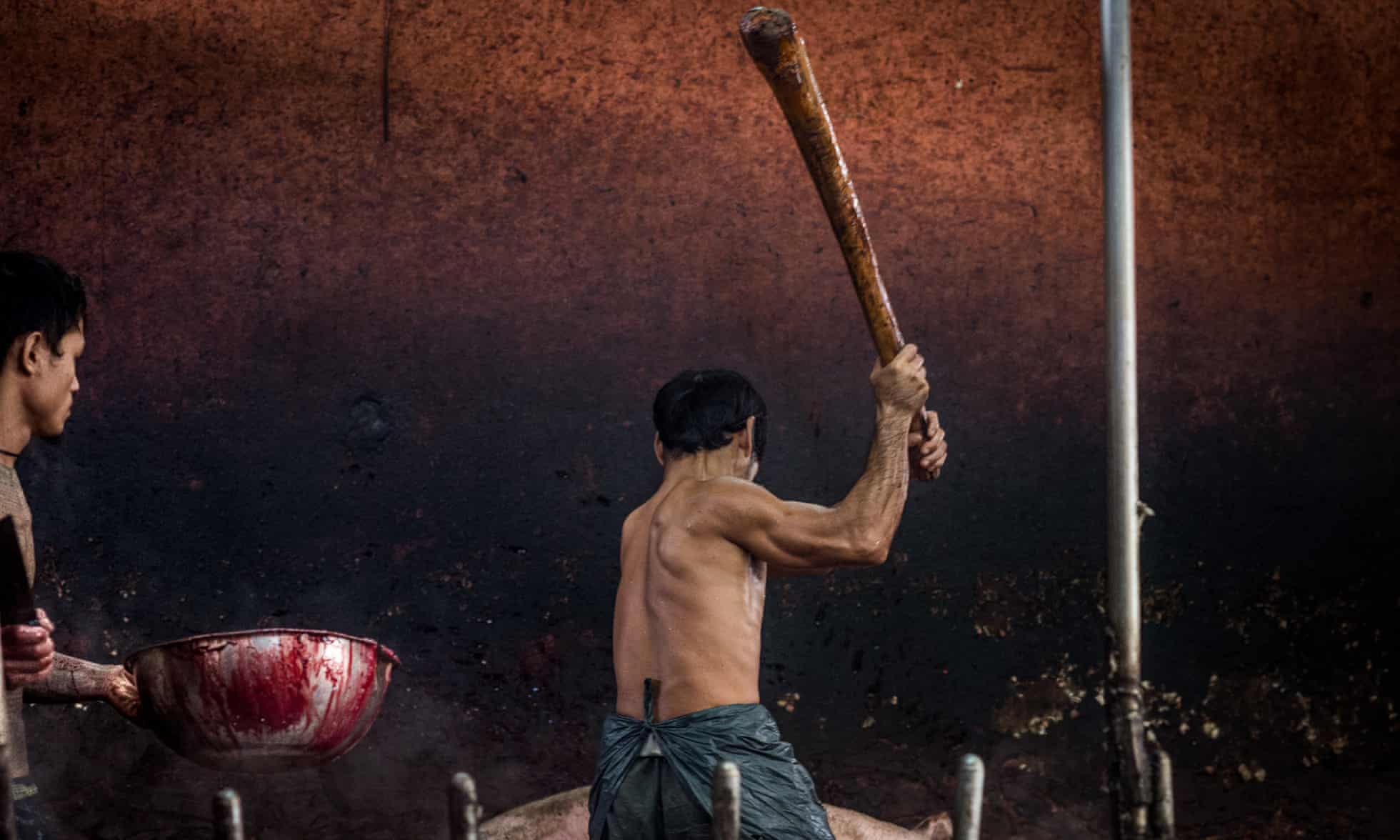
South-East Asian slaughterhouses are clearly among the worst in the world.  No humane slaughter standards are enforced, and sentient beings are violently clubbed to death.   There is little concept of animals as sentient beings, or animal cruelty, in these countries and the animals pay dearly. 

Read The Guardian article here:  WARNING:  Contains distressing images.

Changing The World In Bite-Sized Chunks

Veganism offers an immediate and logical alternative to the reality of the slaughterhouse, writes PAUL TRITSCHLER.  The author recounts childhood memories of roughly handled and severely distressed chickens, and a pig born on a slaughter truck sliding out of the slats to be crushed by traffic on the highway.  

Within the industry that caters to the desire to eat animal flesh, blood lies pooled on concrete floors where helpless animals are ‘beaten, broken, scalded, skinned and dismembered’,  and unspeakable cruelties against them are devised by bored slaughterhouse workers for their entertainment.

The problem is not our desire to consume animals, it is their desire to live.     We have the power to change the brutal, industrialised killing system, as well as positively impacting global problems, if we approach it ‘one bite-sized chunk at a time’. 

Read the CounterPunch article here:

It’s Time For A New Ethic In Our Relationship With Other Animals

Our treatment of farmed animals is a serious moral transgression, writes End Animal Slaughter contributor LYNLEY TULLOCH.  


We’ve all had a bad day every now and again. Some are worse than others, involving a threat to our lives or our safety. Imagine if that kind of bad day were also your last?

I remember someone telling me a while back about some steers that she raised on her property for their meat. These steers were friendly and loved eating apples. When the time came for them to be killed, she would call one of them over. As she was giving the steer an apple, the home kill chap planted a bullet in his head. The steer was having a good day that turned into a very bad one.

They trust us, and we betray them.

In her book ‘The Ultimate Betrayal. Is There Happy Meat?’ , Hope Bohanec discusses the ethics of such a betrayal. When an animal trusts you with their life, says Bohanec, killing them is the worst act of violence and inhumanity possible. She says, “the more humanely an animal is treated, the greater the bond of trust, and the greater the bond of trust, the more severe the crime of betrayal.” There has been a moral transgression, which includes fraud, betrayal and violence.

There has been a moral transgression, which includes fraud, betrayal and violence.

Furthermore, Bohanec discusses the lies we tell ourselves about ‘humane slaughter’ and the idea that it is acceptable to kill an animal as long as she or he lived a good life. You often hear people talk about how the animal had a great life, and only had one bad day (the day of his/her death). One bad day, when the sun was shining down through dappled leaves, and the apple’s sweetness burst in the steer’s mouth. Maybe out of the corner of his eye the steer saw the man raise his gun, but it was too late. One bad moment of realization, and he was dead.

We need to become very real about what we are doing when we kill animals for their meat. We are taking the life of a living, sentient being. This animal does not want to lose their life, it is all they have. Once they are gone their individuality and sentience goes with them, and any possibility they ever had to enjoy themselves drains out of them with their blood.

Too often we have minimized an animal’s suffering on the basis that she or he is not human. We reduce their rich emotional lives to one-dimensional instincts. But animals, just like us, are driven not just by instincts, but by subjective feelings.  Current scientific research convincingly demonstrates that animals can feel the same emotions as humans.

The scientific consensus is that animals feel similar emotions to ourselves.

This much I know to be true. But there are some things I don’t know.

I don’t know what the steer’s big thumping heart felt like when it beat its last beat.  I don’t know if the steer choked on his apple on the way down. I don’t know if he was in pain. I don’t know if nearby birds took flight in fear at the sound of the gun, or if the other steers bolted in panic. I don’t know how the steer was feeling when he woke up that very morning and stretched his legs. I don’t know if the sun was shining that day, his last.  I don’t know so many things.

And I don’t know how humans can hold life in such contempt.

But I do know a whole lot more than the Eighteenth century Western philosopher Rene Descartes. Descartes did not agree that animals feel pain. Despite loving his dog and caring for him, he stated that animals were mere automatons – reacting to external stimuli as a matter of mere reflex or impulse.

I don’t need to do scientific experiments to know animals have deep feelings. There is a pig pen at the back of my house and every Saturday one of them is killed for meat. There is no denying the absolute terror in the squeals. The last guttural horrified gasp as the pig chokes to death on his own blood is harrowing. That last grasp at life sinks into my stomach like a stone, turns my own blood to frozen water. I can sense his feeling of powerlessness as he realized he was being killed. It travelled though my body too. We are all one.

That last grasp at life sinks into my stomach like a stone, turns my own blood to frozen water.

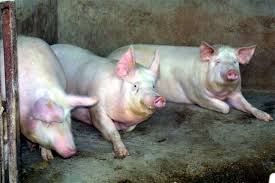
Helpless, terrified pigs awaiting their turn for ‘backyard’ slaughter.  

In focusing on the sameness between humans and animals, new questions are beginning to emerge regarding our treatment of them. Currently humans parade around the Earth as if animals are the mere backdrop to our superior existence, instead of our kin. We often treat them as nothing more than stuffed puppets to look at, or bags of meat encased in skin to eat.

This is a plea to re-think our relationship with animals, especially farmed animals. Farmed animals are the most abused and betrayed animals on Earth. We breed them specifically to satisfy our desires for food and clothes. We mutilate their bodies, forcibly impregnate them, incarcerate them in filthy concrete pens, cages and feedlots, and jam them full of antibiotics to keep them alive just long enough for them to get big enough to eat. We also kill their offspring if they are not wanted ( for example male chicks in the egg industry and bobby calves in the dairy industry).

Animals are our kin, not our inferiors. We need to develop a new ethic guiding our relationship with them based on compassion, respect, and care.


‘Thumping’ and other slaughterhouse terms

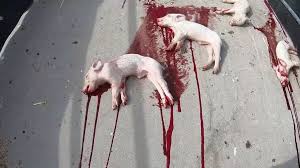
Do you know what ‘Thumping’ or ‘PACing’ means?   It is a slaughterhouse term used to kill piglets (and also baby goats) by swinging them around and pounding their heads against concrete.    

The  act of murdering innocent animals in slaughterhouses, and the cruel methods employed, have their own terms and definitions that ‘sanitise’ the horror of what goes on.   For example, ‘C02 stunning’ may sound as if the animal quietly goes to sleep, but as undercover footage has shown, this method causes pigs to gasp for breath and hyperventilate, causing both pain and panic, for up to 60 seconds.  The ‘scalding tank’, while meant for dead pigs, sometimes holds conscious animals whose last minutes are filled with indescribable agony.  

Slaughterhouses are places of cruelty and injustice, and they need to close down.

Here are some common terms.  (Acknowledgement:  ‘Slaughterhouse’ by Gail A Eisnitz)


GLOSSARY OF SLAUGHTERHOUSE TERMS

Antemortem inspection:  The examination of live animals prior to slaughter.
Blood Pit:  The area of a slaughterhouse where animals are bled out.
Bloodsplash: The rupture of capillaries in muscle tissue during electrical stunning which causes unsightly blood spots in the meat.  Bloodsplash hemorrhages are problematic from an aesthetic viewpoint, and cause a reduction in meat value.
Bung:  A slaughtered animal’s anus.
Captive bolt gun:  A gun, powered by compressed air or gunpowder, that drives a bolt into an animal’s forehead to render the animal unconscious.
Carcass: The skeleton and musculature of an animal, minus the head and legs.
Chain: The overhead conveyor that carries shackled animals from worker to worker through the slaughter and dressing processes.
Chain speed: How fast the chain is moving, measured in number of animals per unit of time. (Aka Line speed)
Chill tank: A giant refrigerated vat of water where chickens are communally cooled after dressing.
Chitlins: The intenstines of hogs (pigs) used in prepared foods.
Chutes: Enclosed passageways that lead animals from their pens to the stun area.
CO2 stunning (carbon dioxide anaesthesia):  A method used to render an animal unconscious for slaughter.
Downer:  A sick, spent, or disabled animal that cannot stand or walk.
Dressing:  Removal of the hide, appendages and viscera.
Gutter:  A worker who takes the guts out of slaughtered animals.
Hot shot: An electric cattle prod.
Kill floor: Where animals have their necks or chests sliced.
Legger: The worker who cuts off and skins an animal’s legs.
PACing  (sometimes called ‘thumping’):  Method of killing piglets whereby the piglet is picked up by the hind legs and slammed against the floor.  This causes massive head trauma, resulting in death (though not always instantaneous).
Render: The process whereby animal parts are cooked down, to separate fat from protein, and then sold for use in animal feed, fertilizer, oils, plastics, cosmetics and a host of other household and industrial products.
Ritual slaughter:   Religious slaughter done according to the requirements of either the Muslim or Jewish religious faith. The animal is slaughtered, often without being stunned, with a razor sharp knife.
Scalding tank:  A long narrow tank containing 140 degree water through which hogs are dragged to loosen hair for dehairing.
Shackler: A worker who places a chain around an animal’s hind leg so that it can hoisted and hung on the overhead rail.
Stunner: The worker who stuns the animals before they are shackled and hoisted.
Sticker: The slaughterhouse worker who cuts the animal’s throat open to bleed it.


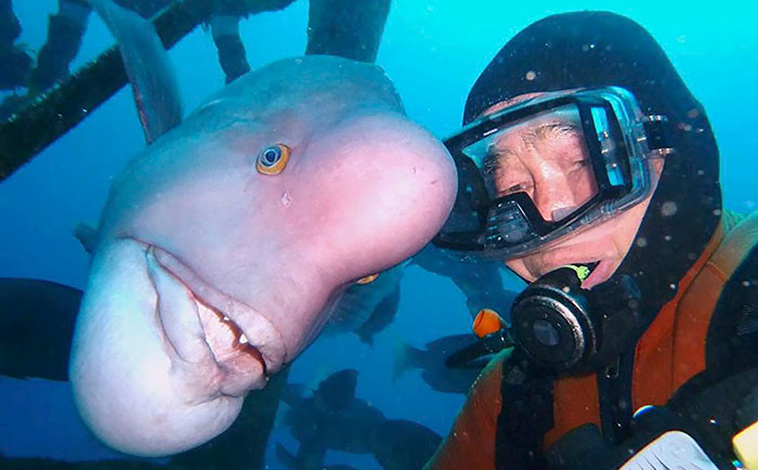
‘There Is a Sense of Trust Between Us’

This moving  story of human/non-human friendship is one of the most unusual we have seen.  It is the story of a Japanese Diver and his friend Yoriko, a humphead wrasse. 

The wrasse is a large, diverse and remarkable fish.  There are more than 600 species of wrasse, ranging in size from 20 cm to 2.5 metres, and they can live up to 50 years.  The most well known wrasse,  the ‘cleaner fish’, lives in symbiosis with larger, often predatory, fish, grooming them (sometimes swimming into their open mouths and through their gill cavities) and benefiting by consuming the parasites they remove. They can clean many hundreds of ‘clients’ every day, and as many visitors to Aquariums know, it is a sight to behold to see a line of fishes congregated at cleaner stations, waiting for their turn! 

It has been well established that fishes feel pain, and it is thought increasingly likely they feel emotions too.   Why then do we cause these sentient creatures, trillions of individuals a year,  so much suffering?   We happily teach our children to impale them in their sensitive mouths and haul them into a medium where they cannot breathe.     Our appetite for fish means that cruel commercial and factory farming practices prolong their suffering and also risk depleting the ocean of its inhabitants.  Is this not madness?   

It’s time we called a halt to the carnage.   It’s time we stopped eating fish.    

Read the article and watch the video about Hiroyuki Arakawa and Yoriko. 

See also:

Marc Bekoff’s article on fish sentience.

‘An Earth Without Insects?’


Eighty percent of the biomass of insects has disappeared in just thirty years, and intensive agriculture, particularly the heavy use of pesticides, is  the main driver of this collapse.    

The decline in populations worldwide is devastating not only for the insect species but also for many birds, reptiles, amphibians and fish that eat insects.     It should also be of huge concern to us:- 

“Insects are at the heart of every food web, they pollinate the large majority of plant species, keep the soil healthy, recycle nutrients, control pests, and much more.”

Widespread deforestation to grow grains to feed cattle over the last 30 years is a major cause.   Stopping animal agriculture is one of the ways we can begin to reverse this worrying trend.   

Insects are an essential part of the web of life.  We need to learn the lesson that exterminating other species for our own ends is not only morally wrong, it is bringing about devastation in the natural world.  

Read the Guardian article here:

Slaughterhouse Vigil, Land Meats, Whanganui, NZ: 28 July 2019

End Animal Slaughter website owner Sandra Kyle does regular weekly, or twice-weekly, slaughterhouse vigils in her home town of Whanganui, New Zealand, under The Save Movement banner. 

Sandra has been bearing witness to animals going to slaughter for nearly four years, and putting her accounts and photos up on her Facebook page.  Here is her latest blog:-

‘I think of them now as the sun goes down and the temperature drops and the only comfort they have is the warm bodies of their friends. Tomorrow morning these warm bodies will become slabs of meat. If you are reading this and you eat meat, please think of them as you fill your supermarket trolley this week’.

SLAUGHTERHOUSE VIGIL, Whanganui, 28 July, 2019

Whanganui was in communicative mode today. In the two hours we were in front of Land Meats we received more than usual toots from the roughly 400 cars that passed (I’m basing this estimate on previous counts). I have recently had my cataract-correcting lenses cleaned, and my vision has improved. As a result I can now clearly see the expressions on the faces of the car drivers.

They fall into two categories: those who don’t react/those who react, roughly 50/50 percent. Of those who don’t react they are just pretending they didn’t see us. 😊 Of those who react we have the hornblowers (the ones who give short toots are approving, those who sit long and loud on the horns are usually hostile), the smilers, the friendly wavers, the stoney-facers, the gesturers (thumbs up and down, middle finger up), the headshakers (up and down and side to side) the yellers of expletives (the majority) the yellers of encouragement (only a few) the neck craners, the jaw droppers, a couple of times we have had the throwers (fruit and glass beer bottle) and for the first time today a man who took his hands off the steering wheel to clap!

Only one small truck arrived, and while Monica stayed on the road with the signs, I tried to get some photos. Several cows had their faces above the truck as the driver stood on the roof using his electric prodder. I kept missing the good shots (typical), but in the photos I took you can see part of the cows’ heads. The groundsman came out and took photos of me taking photos of them. As usual, I had a lump in my throat and not feeling at all humorous, but I should have done some posing. Like a model. Haha. Only thing is my sense of humour seems to escape me when I’m at the slaughterhouse. I wonder why…

I sang to the cows as they waited to be offloaded, and then sneaked around the side and took a very short video of them in the pen. I think of them now as the sun goes down and the temperature drops and the only comfort they have is the warm bodies of their friends. Tomorrow morning these warm bodies will become slabs of meat. If you are reading this and you eat meat, please think of them as you fill your supermarket trolley this week.


They Tried to Escape Their Fate

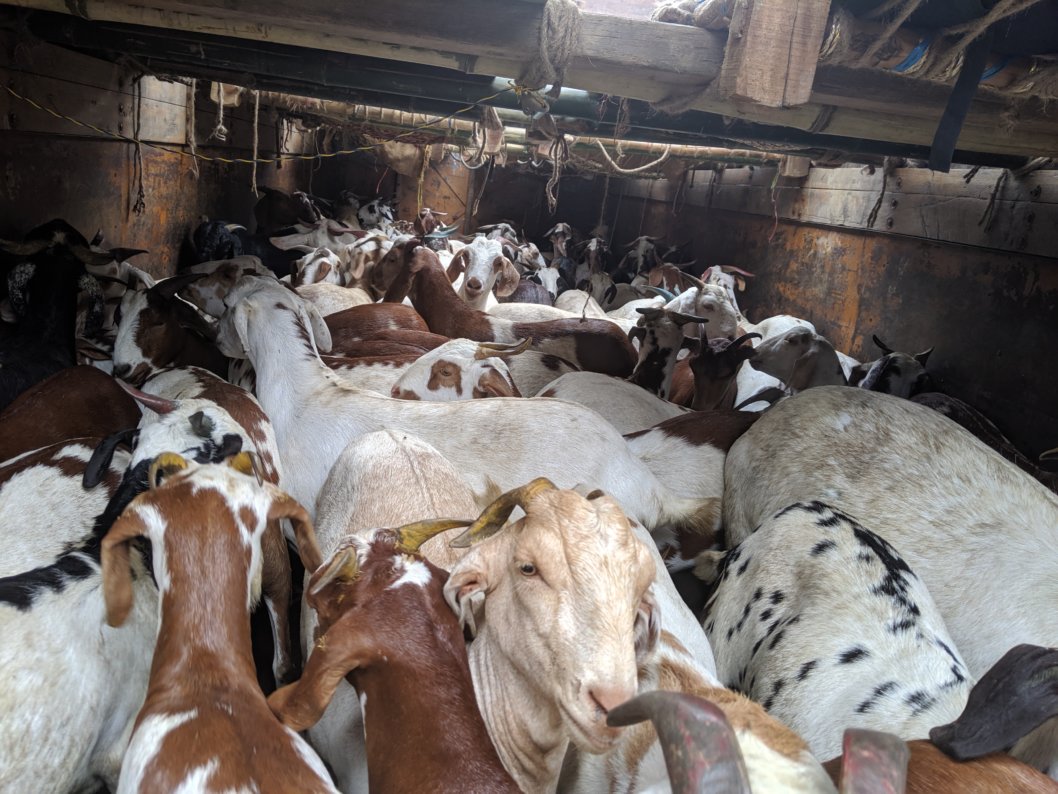
Standing at slaughterhouse gates bearing witness to the animals, Save Movement activists all over the world take photos and videos to share on social media.  This documentation clearly show that animals are worried and fearful.    On the trucks going to the slaughterhouse, on live export ships, animals also sense something is wrong.  A tiny minority make a bid to escape.  Here is some of their stories, that often ended very badly for the animal.  We have to stop treating sentient beings as commodities.   When enough people transition to a vegan diet, slaughterhouses will close.

Read the Mercy for Animals article about animals who tried to escape:-

A Plate of Scrambled – Roosters?

What’s behind your plate of scrambled eggs? End Animal Slaughter guest contributor SARAH OLIVER reminds us of a couple of things we may have overlooked.


It often crosses my mind that our ability to ignore the blindingly obvious makes us, and those we share the planet with, vulnerable.  A case in point is the short and painfully difficult lives of chickens.  We love to eat their flesh, as well as the fruits of their female reproductive system.  Tucking into our plate of scrambled eggs, chances are we don’t consider two major components that have been involved in producing our eggs.      One is the mysterious case of the disappearing males, the other is the ability of the modern layer hen to produce huge quantities of eggs.  No other bird in history has ever done this, for a good reason.

Before humans intervened, the ancestors of today’s hens produced around 15 eggs a year, in spring.   However, in order to satisfy our seemingly unquenchable desire to eat eggs, modern birds have been bred to lay on and on and on, at huge detriment to their small bodies, leading to them being ‘spent’ at only a fraction of their natural lifespan.

Hens can undergo horrific conditions as a result of this intensive laying.  Treated not as sentient beings but as food production units on factory farms, we can only imagine the toll on their frail bodies.  Alongside other conditions and infections, they suffer from osteoporosis.     So much calcium is used in the production of egg shells that the birds are left with brittle bones.  I once talked to an ex-chicken factory worker who said that when handled, their wings can just snap off because their bones are so weak.

The second component we miss when we are tucking into our scrambled eggs is that hens produce both male and female offspring, so what happens to all the males?    They cannot lay eggs so the Industry considers them a financial liability.   They therefore get rid of them as soon as possible after birth. For the baby roosters this means getting minced alive, (imagine throwing baby chicks into a blender) or gassed, within a few hours of hatching.  This is what we do to over 3 million baby birds each year in New Zealand.  In the UK it is 30 million, so we can only imagine the numbers of roosters macerated worldwide.

In 2001 I read an article about workers in New Zealand who were being re-organised into different roles in the egg industry.   Their new role in the production line was to feed otherwise healthy rooster chicks into the shredding machine. Their complaint was that they were ill-prepared to deal with the emotional difficulties of this role.   It is not hard to imagine how horrific such a job would be, spending your day picking out and throwing live healthy baby animals into a machine that grinds them up.  But this is what goes on, and this is what we ask of others when we purchase eggs. If we are horrified at the thought of mincing baby animals alive, then is it right to ask others to do it for us?


We live in an overpopulated world which makes our food choices more weighted than they have ever been. Bombarded with marketing and often conflicting nutritional advice on an unprecedented scale,  eating eggs and chicken meat seems to be winning on the promotional front.  We are turning away from red meat, but consuming a staggering amount of chickens and eggs worldwide.  According to one estimate, we kill more than 50 billion chickens every single year, an astronomical number that does not include the killing of male chicks, and hens who can no longer produce eggs.

Such is the prevalence of chickens, those we eat and those who lay our eggs, that there has been the suggestion that a mark of our modern world will be the chicken bone fossil record we will leave behind us.  Who would have thought that the humble chicken would be the defining characteristic of our age?

There is a huge amount of often contradictory information from the medical, food and dietary industries about the kind of food we should be eating, and we are also subjected to compelling advertising from the fast food industry. This can muddy the water when it comes to deciding what food is best for us.   I have a suggestion that may help our decision.   What if we put ethics and compassion first, then decide what goes on our plate from there?

I have a suggestion that may help our decision.   What if we put ethics and compassion first, then decide what goes on our plate from there?

There is a wealth of researched information on the benefits of eating a vegan, plant-based diet.  Fortunately,  over the last few years many plant-based alternatives to eating animals have emerged, and there is a wide variety to choose from.   Eating a plant-based diet is now easy, and like any other diet, it can be cheap or expensive, whole food or processed, depending on your preference and budget.  I think it is time that we rethink our relationship with the most prevalent, invisible, abused bird on the planet, the poor old Gallus gallus domesticus.  Just as we can only empathise, but not experience, another human’s pain, we cannot know precisely the level of suffering that goes on for a chicken. However, we can be sure that as sentient, complex, social animals, they do suffer, as they endure the cruel and unnatural life we have subjected them to.

Surely no plate of scrambled eggs is worth all that suffering.    Vegan scrambled eggs, on the other hand, are just as tasty, and cruelty-free.