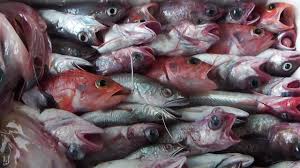
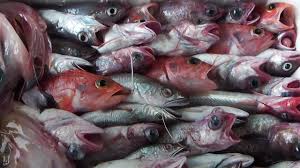
Animal cruelty is largely ignored, when it comes to fishes

This week a global salmon farm operation headquartered in Canada, is under investigation for animal cruelty as a result of a campaign conducted by Compassion Over Killing (COK).   Undercover footage shows salmon being scooped out of cramped tanks and tossed into plastic containers where they are left to slowly suffocate.  

Read the Guardian article here. 

Fishes are without doubt the most abused vertebrates on the planet, and the last for the public to recognize their sentience.    Despite many scientific investigations showing they feel pain and emotions, are smart, and form attachments just like other groups of animals, it is still widely believed by the general public that fishes do not possess these characteristics.  Joker Star Joaquin Phoenix describes a fishing experience that he had at the age of 3: “The animal went from a living, vibrant creature fighting for life to a violent death. I recognized it, as did my brothers and sisters.” 

It is not OK to torture sentient beings by painfully ripping open their flesh, and suffocating them.  It is a bad idea to teach a child to fish, and it’s time to throw the fishing rod on the recycle truck.    Commercial fishing and fish farming is extremely cruel to fishes, and should be banned.  

So what does a fish feel and know?   Read the Q&A with scientist and author Jonathan Balcome, author of What a Fish Knows: The Inner Lives of our Underwater Cousins 

Read the Huffpost article here: 


I

SLAUGHTERHOUSE VIGILS, Whanganui and Christchurch (NZ), 13 October, 2019

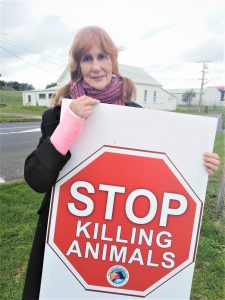
END ANIMAL SLAUGHTER’S SANDRA KYLE, (70), DOES TWICE WEEKLY VIGILS, OFTEN ALONE, OUTSIDE ONE OF TWO SLAUGHTERHOUSES IN HER HOME TOWN OF WHANGANUI, NEW ZEALAND.   SHE IS PART OF THE WORLDWIDE  ANIMAL SAVE MOVEMENT, THAT HAS NEARLY 900 GROUPS ON FIVE CONTINENTS. NEW ZEALAND HAS FIVE ANIMAL SAVE GROUPS WHOSE REGULAR ACTIONS OUTSIDE SLAUGHTERHOUSES ARE GROWING IN STRENGTH AS MORE VEGANS BECOME ACTIVE FOR THE RIGHTS OF THE INNOCENT AND THE DEFENSELESS.  

JOY ANN SATCHELL, (73),  OF THE CHRISTCHURCH (NZ) ANIMAL SAVE GROUP ALSO DID A SOLITARY VIGIL THIS WEEKEND.   AN EXCERPT FROM HER REPORT:

‘It was a new experience standing alone at the slaughter house gates. I spent more time talking to the animals, over and over, I told them how sorry I am. I told them, I see you and this is goodbye.  Seeing the trucks arrive carrying their precious cargo, I felt deeply sad…. The sadness only strengthens my resolve to fight harder.
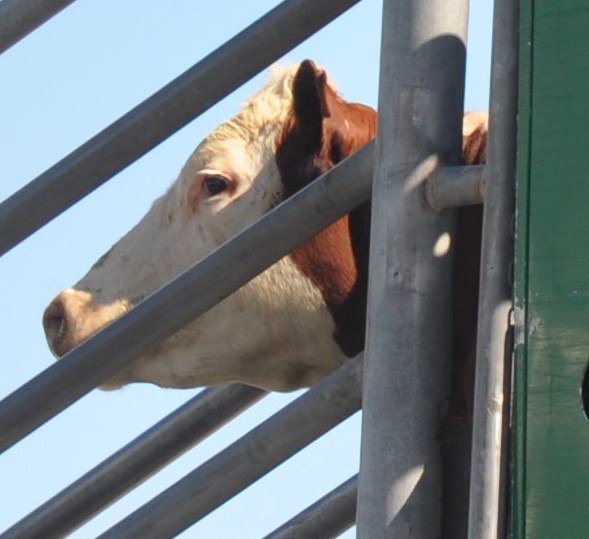
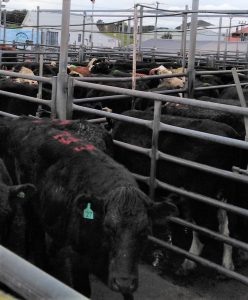
There they stand these beautiful, gentle cows, waiting in holding pens until tomorrow. In the morning they will be herded through the slaughter house doors, and they will be murdered with a knife across their throat. Bodies to be chopped up, wrapped up and put on display in a supermarket. This is the sole purpose they they were born, to fill the appetite of people who crave dead flesh.  They have as much blood on their hands as the slaughter house worker. They support this horrific industry’.

AN EXCERPT FROM SANDRA’S REPORT

SLAUGHTERHOUSE VIGIL, Whanganui, 13 October 2019

With Monika still away in Australia I was by myself again today.

As the sheep and bobbycalf slaughterhouse wasn’t receiving cattle today, I went to the nearby cow and pig slaughterhouse and stood on the roadside with my signs. I have never noticed a gender bias for drivers’ positive toots, although more males yell out expletives and give the finger and other gestures of disapproval than females do. I had quite a few of those today, plus a man who pulled up beside me and angrily told me off for trespassing.

I walked around the side where the pens are and looked over.   A group of Black Angus were directly below me. I have noticed that Black Angus tend to be more agitated than the other breeds of cows I see, who I would describe as looking more scared and depressed. Can anyone who knows more about cattle than I do tell me why this would be? Why would Black Angus be visibly more agitated than other cows? Are they known for being more highly strung?

I stood in the part of the forecourt that is designated as pedestrian and took photos of animals who arrived in two truckloads. The sun was shining and there was little wind, and although I was more than thirty feet away, the animals could clearly hear me talking to them: ‘Hello my darlings, Hey babies! How are my boys?’ How are my girls? You’re so beautiful. I love you so much. You’re so beautiful, aren’t you babies?’. I also sang to them, ‘Om Sri Ram Jai Ram Jai Jai Ram’ – over and over again, until every cow was unloaded from both trucks.

I know many dedicated animal activists who won’t do slaughterhouse vigils, because it is so confronting and so depressing. I understand that; I still get depressed, every single time. Yet even though the sights, the smells, and the sounds – metal doors clanging, chaotic hooves on wooden ramps, rough shouts from the workers – play on my mind, I still want to do this work. Seeing the poor animals makes me all the more determined to do everything I can to stop the terrible injustice.


Eating animals is barbaric, but it’s easy to adopt a vegan diet

End Animal Slaughter contributor LAURIE TURUNEN is an artist, and is currently writing a vegan cookbook.   In this short article she asks us to consider our assumptions about why it’s OK to eat meat, and urges us to adopt a healthier, more compassionate vegan diet.


Humans who believe they are nice people, yet support the kind of injustice and savagery to animals required to produce the meat they eat, really need to ask why their “niceness” is selective.

If I said I would get hold of a dog, forcibly inseminate her, take her baby away if it’s a boy and kill it, take her milk, repeat the whole cycle again until she can’t take it any more and then kill and eat her, would you think this was OK.   Why then is this OK for a dairy cow?

Do you willingly support the worst inhumane atrocities to others who experience pain just like us?  If you were being tortured and mutilated, kept in a tiny smelly cage, soaking in your own excrement, waiting to be violently slaughtered, would you want everyone to just mind their own business?

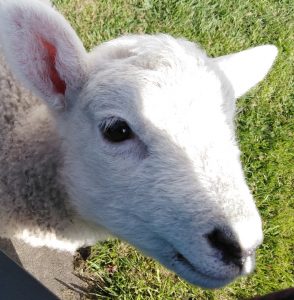
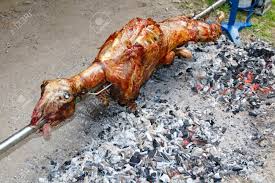
If you eat meat, would you be able to kill the beautiful lamb in this photo? No??? Then how natural is it for humans to be eating animals? Humans are not lions, tigers or bears so we should stop pretending we have the same instincts.

It is time for you to stop and think about what you have been so programmed to believe is necessary or ethically okay.   Killing and chopping up animals to eat them is neither.

Going vegan is the awakened, compassionate thing to do. I don’t care how addicted you are to eating dead body parts or how much you believe you need them. You don’t need them and your habits are easy enough to change.

Eating low fat vegan, mainly fruits, vegetables and herbs, does the body a lot of good. For example, there are studies that show that eating heme iron from meat increases the likelihood of heart disease, cancer and diabetes significantly! It’s the non heme iron from plants, like leafy greens, vegetables, dried fruit, nuts, seeds, beans, legumes and some grains, that is the healthiest type of iron for the human body.

The Physicians Committee for Responsible Medicine among other medical bodies support a plant based diet, and state that plant-based food is superior to meat.  All plants contain protein and vital nutrients to keep you healthier.   Protein is NOT the most important nutrient in our food! Even if you believed it was, there is more than enough of it in plants.

Our food should not be barbaric. Eating animals is nothing but that.    If we eat meat and dairy, then it is time for you to go deep and question your heavy programming, misinformation and lies that have been drilled into you since birth.

Adopting a vegan diet is the healthiest, most sustainable and compassionate thing to do.   What’s more, with so many choices now, it is easy.  

Have mercy on animals and improve your own health by going vegan.

Mooove Over Animal Agriculture: Plant Proteins Are Mushrooming

Emerging technologies spell the end of animal agriculture within a couple of decades, according to a new report from international Think Tank RethinkX. While we agree, at End Animal Slaughter we believe that the report’s authors timeline is too conservative – by 2025 most animal-derived protein will have come to an end in the western world. 

Farmers should be reading the signs now, and begin the work of transitioning.

Read a summary of the report here

Social Change And The 3.5% Rule

Non-violent resistance won voting rights for women, India its independence and black Americans their rights.  It has also mobilised climate change, empowered the labor movement, closed down or cancelled dozens of nuclear plants, and any other number of other actions in social and political contexts.  

When compared to armed or other violent action, non-violent resistance has also historically been the most effective. It is not always guaranteed to work however, and even those actions that are in the end successful, may come with short term despair about the inevitability and intractability of the status quo. 

Erica Chenoweth from Harvard University studied hundreds of campaigns over the last century, and concluded that non-violent resistance achieved twice as many wins as violent, and what’s more, that when only 3.5% of the population is mobilised for change, every action ended in success. 

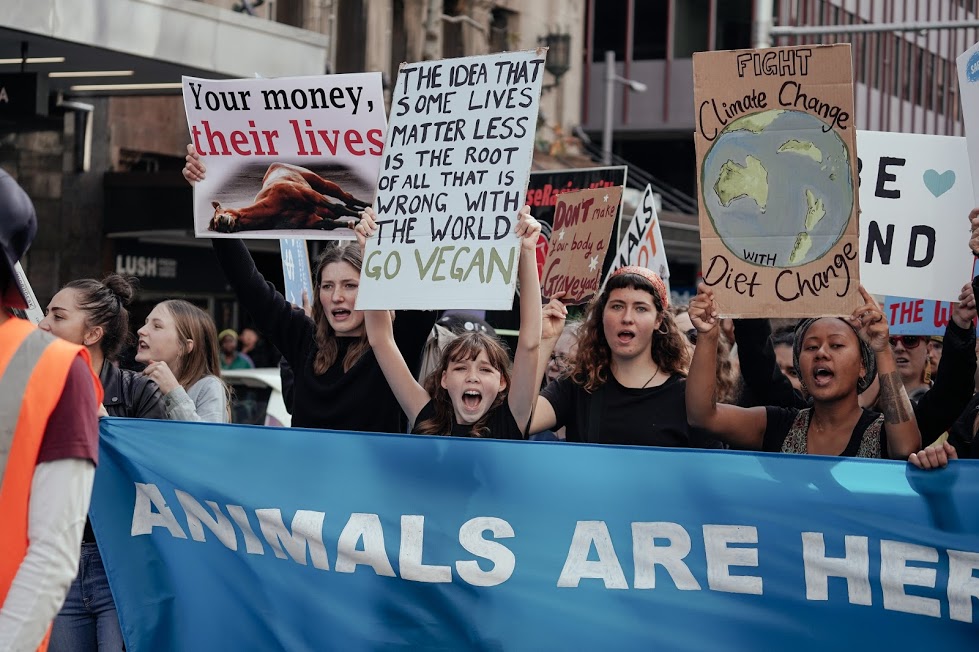
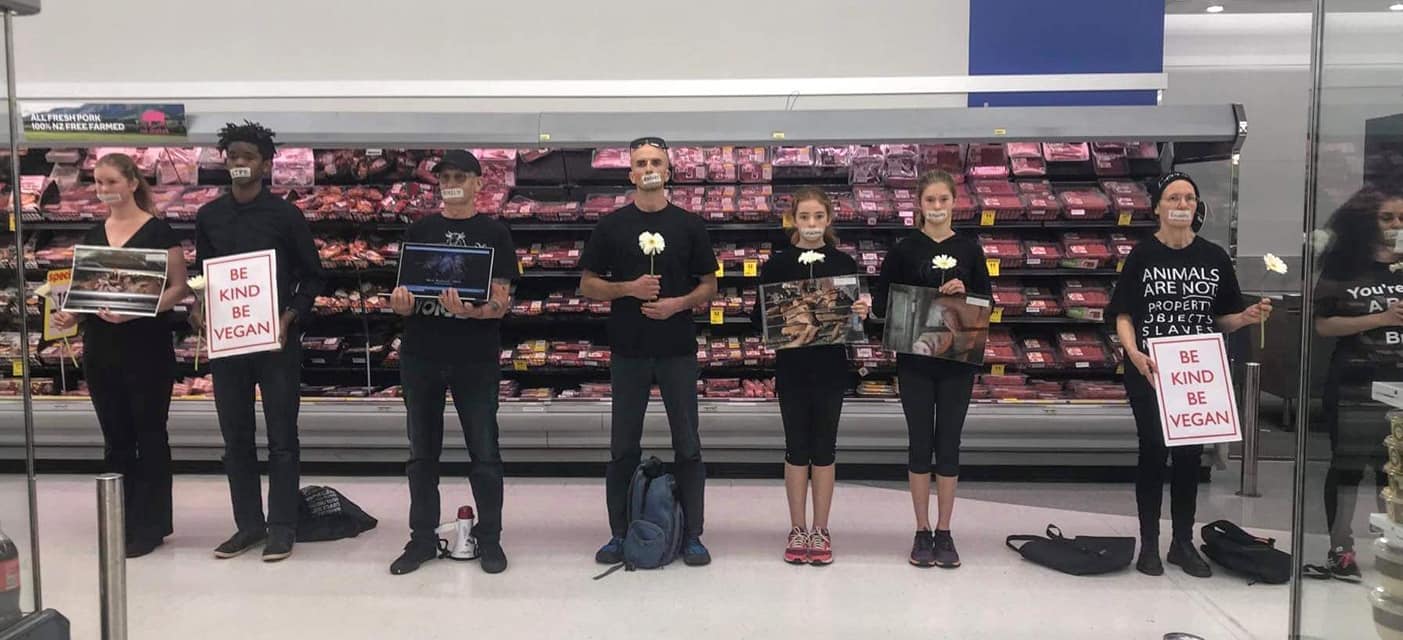
Feature photo taken by Diego Casanova at the 2019 Official Animal Rights March in Auckland, New Zealand.  

Read the article here:


World Animal Day – October 4th

MISSION OF WORLD ANIMAL DAY

To raise the status of animals in order to improve welfare standards around the globe. Building the celebration of World Animal Day unites the animal welfare movement, mobilising it into a global force to make the world a better place for all animals.  It’s celebrated in different ways in every country, irrespective of nationality, religion, faith or political ideology.  Through increased awareness and education we can create a world where animals are always recognised as sentient beings and full regard is always paid to their welfare.

See Website:


Gandhi’s Birthday An Opportunity to Remember Innocent Victims

There is an International Day for nearly everything, including the toilet, the frog, the coffee bean – and the farmed animal.   On World Farmed Animal Day it is an opportunity to remember and mourn the 70 billion cows, pigs, chickens, turkeys, and other sentient land-based animals who lead lives of sheer misery in the world’s factory farms, and are then brutally slaughtered for our dinner table.  End Animal Slaughter contributor LYNLEY TULLOCH urges us to stop turning the other way, and stand up and fight for their rights.


If you blinked you may have missed it. The 2nd October 2019 was the ‘World Day for Farmed Animals’. It is also Ghandi’s birthday. There seems to be a day for everything, even a ‘World Frog Day’ on March 20 and a ‘World Toilet Day’ coming up in November 19.  I am still patiently waiting for ‘World Coffee Day’ – oh wait. It was on the 1st October. Not to mind, if I missed it. I drank my usual amount of black coffee on that day and celebrated it in private.

There is often an unexpected message behind many of these special days. For example ‘World Toilet Day’ was convened by United Nations and aims to raise awareness about sanitation issues across the globe. Apparently 2.5 billion people across the globe lack access to proper toilets. I am not sure if that includes the unpopular freedom campers here in New Zealand. But what about farmed animals? New Zealand has many more farmed animals than it does freedom campers. It is only fair that they get a look in. What is 2nd October mean for farmed animals? ‘World Day for Farmed Animals’ was set up in 1983 as part of an international campaign of Farm Animal Rights Movement (FARM), from Washington DC.

Here in New Zealand ‘World Day for Farmed Animals’ was marked by Slaughterhouse Vigils, which are part of the ANIMAL SAVE movement. In Wellington, Christchurch, Nelson and Whanganui, activists stood outside slaughter houses to honour the victims who were being killed behind closed doors.

Standing at the slaughter house gates is one way of making visible the suffering of animals. It is a rather unpalatable fact that in order to get onto your plate animals must first be farmed and killed. It all gets hidden behind closed doors and smelly transport trucks. And the killing is definitely out of sight. We are told it is ‘humane’ and that there are rules and regulations to ensure animals live well before being killed.

Call it humane if you want, but I am not convinced that having my brains electrocuted or shattered before my throat is cut would be my preferred form of death. I’d prefer to go out in my old age while I am sitting quietly drinking coffee, nursing a frog, and sharing the need for worldwide sanitation on social media. Well, anything really, apart from death by electrocution and stabbing. I think there should be a ‘World Day to Call a Spade a Spade’.  No death this way is ever humane – and if you can’t say you would be happy having it done to you, then you have no business inflicting it on another living and sentient being.

It’s the reason I drink my coffee black and bitter. It matches my mood. I’m terribly bitter about the plight of farmed animals for a variety of reasons. I know humans have been domesticating and farming animals for about 10,000 years. I realize it is oftentimes regarded as a turning point in human evolution. I’m not here to judge my ancestors who have been dead for thousands of years. They might have lived and breathed, blood dribbling down their stubbly beards as they chomped into a half-cooked piece of meat, but I am not certain it justifies what we do to animals today.

My ancient ancestors did what they had to. They set their square jaws rather firmly, gathered up the goats on the hills and put them in a pen. I can’t argue with that. But I am here in 2019 in peace, with my coffee (no milk), feeling bitter about the calves who died for those who like cow’s milk in their coffee. Around 2 million calves are killed every year in New Zealand for the milk their mother’s make. These cows are impregnated with the express purpose of inducing lactation from birthing. ‘World Day for Farmed Animals’ was an opportunity to try and raise awareness of this, and other, unpalatable farming facts.

‘World Day for Farmed Animals’ is, like other days, an attempt to make visible some injustices in our world. Coffee growers often get paid unfairly for their produce – hence we have ‘World Coffee Day’. Frogs may become extinct. We have World Frog Day.  Animals are raised in intense confinement and filth and killed by electrocution and stabbing. Literally billions of them in fact. Is one day enough?

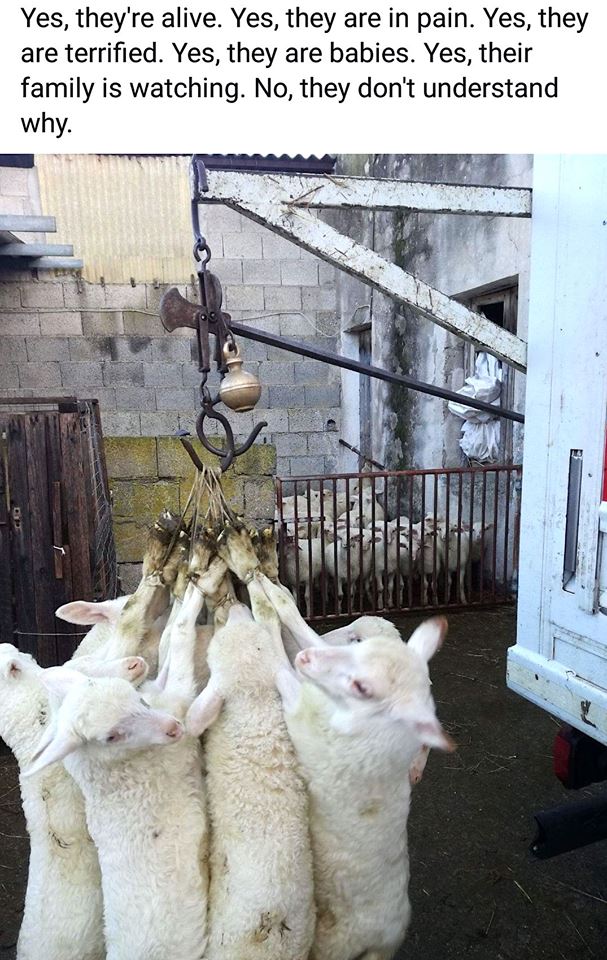
The animals that are killed and farmed include newly hatched male chicks who are ground up alive or suffocated. Laying hens who are crammed in small wire cages. Pigs in gestation crates, pigs in gas chambers, piglets who have their curly tails cut off without anesthetic, dairy cows who have their calves taken from them, farmed fish who suffocate slowly. Newborn dairy goats whose heads are slammed on concrete.


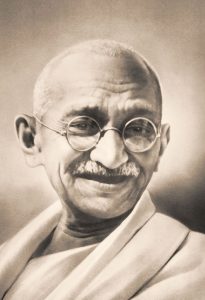
Gandhi, whose birthday it was on ‘World Day for Farmed Animals’, famously said: “Be the change you want to see in the world”. So I try. I don’t eat animals or animal products. I rescue bobby calves. I try.   It is all any of us can ever do.

We have nearly a whole year to prepare for the next ‘World Day for Farmed Animals’.  During that time more than 70 billion land will be killed for food globally. The scale and the suffering are unimaginable.

Don’t blink next year. Stand up and fight for their lives. All 70 billion of them.

Fish Feel Pain

Antiquated ideas about fish not being able to feel pain and lacking the brain structure necessary for a subjective experience of the world still persist, despite a growing body of evidence to the contrary.   Through line fishing, deep sea fishing, commercial fishing, and factory farming, we continue to subject trillions of sentient beings to pain and suffocation every year. 


QUOTE FROM FEATURED ARTICLE:

“I recently learned of a culinary tradition, still practiced today, known as ikizukuri: eating the raw flesh of a living fish. You can find videos online. In one, a chef covers a fish’s face with a cloth and holds it down as he shaves off its scales with something like a crude cheese grater. He begins to slice the fish lengthwise with a large knife, but the creature leaps violently from his grasp and somersaults into a nearby sink. The chef reclaims the fish and continues slicing away both its flanks. Blood as dark as pomegranate juice spills out. He immerses the fish in a bowl of ice water as he prepares the sashimi. The whole fish will be served on a plate with shaved daikon and shiso leaves, rectangular chunks of its flesh piled neatly in its hollowed side, its mouth and gills still flapping, and the occasional shudder rippling across the length of its body”.


Read the article from Hakai magazine here

For up to date information about fish sentience follow fishfeel.org

All Hands On Deck For the Animals!

Animal Activist Carl D Scott offers his thoughts on activism, and states that veganism is the least, not the most, we can do.

Carl D Scott is an animal rights activist and blogger based in the city of Ōtepoti/Dunedin, in Aotearoa/New Zealand. He attracted national media attention some years ago when he locked himself in a small cage on the side of the road for a month, to highlight the plight of caged hens.


There are many, many, MANY different ways to do activism.


It can be as simple as talking to friends and family about veganism. It can be other things like posting on social media, blogging, and running websites; vegan outreach; movie screenings; public talks, seminars, or workshops; vegan cooking classes; hosting vegan potlucks; posters, billboards, stickering; vegan festivals and expos; vegan barbecues, cupcake stalls, or other forms of food outreach; art, music, performance; writing and publishing magazines and books; photography, videos, podcasts; lobbying businesses, politicians, and other influencers; media commentary; AV Cubes; SAVE vigils; DxE disruptions; protests like The Official Animal Rights March or Rodeo protests; and all the other types of activism right through the spectrum, to disruptions, investigations, open rescues, and direct action lock ons.

Additionally, donating money to individuals (sometimes through a Patreon account) or groups doing activism, can even be thought of as a form of activism in itself.
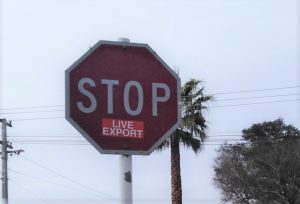
Not everyone can or wants to do disruptions, protests, or direct actions, for a whole range of legitimate reasons. Some have physical or mental health problems. Others experience significant anxiety in social situations, especially when it involves tension or confrontation. Others have family commitments. Some people have to be mindful how activism will impact on their careers. Others are already very busy involved with other activist causes and movements.

And that’s all ok. All of us have different strengths, talents, and abilities. Each of us has something unique to bring to the table. We each have our niche within the movement. We all have something important and valuable to contribute.

But each of us must contribute in whatever ways we can, if we can. It is simply not fair to let a small handful of activists do all the work.

The problem of animal exploitation is gargantuan in scale. It is estimated that nearly 3 trillion animals are killed by our species every year. The problem is also extreme in severity. Most of the 75 billion land animals we kill annually live their short miserable existences in the hell-on-earth nightmares, we call factory farms. This means severe levels of suffering, often over long periods of weeks, months, or even years. And they all – land animals and marine animals alike – die violent, horrible deaths, usually at a very young age, and always against their will to live.


Then there is the massive and serious environmental destruction being caused by industrial animal agriculture and the commercial fishing industry. There are also the millions of people in the West dying needlessly from diseases of excess caused at least in part from consumption of animal products, while other millions in poor nations starve to death because we are giving food they could be eating to farmed animals. Animals also suffer and die in entertainment, for clothing, for scientific research, teaching, and testing, and in other ways too. There are other associated human rights issues as well.

Let’s be frank about this. Let’s say it out loud. We are trying to end the most horrific injustice in history. The suffering and death involved in the animal exploitation industries is not a ‘problem’ or an ‘issue’. It is a crisis. An emergency. Every year we drag our heels, another 2.8 trillion (approximately) animals suffer and die.   I truly believe we can win this. With climate change being a major issue, and with animal agriculture being a major culprit, people are finally listening.
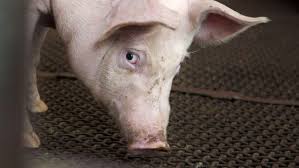
If we’re going to get anywhere, we need all hands on deck. We need as many vegans as possible to be activists. And we need every activist to do as much activism as they can, as often as they can, in whatever ways they can.

However…. This has got to be said. History has proven again and again and again, that the more confronting methods of activism, such as disruptions and direct actions are actually the most effective methods for creating rapid and meaningful change. King, Gandhi, and countless others have demonstrated that. It simply cannot be disputed.

So the bottom line is this: The more people we have doing the more confronting forms of activism, the faster we will make progress.

Photo credit: Diego Casanova

Yes, they do have to be well managed to achieve maximum impact. All forms of activism should strive to reach the highest levels of professionalism possible to achieve credibility for our cause, and to effectively win hearts and minds.  As well as being well organised, hopefully it goes without saying that such actions need to be non-violent.

We shouldn’t let the desire for high standards stop us from getting out there and giving it a go. Everyone has to start somewhere. And while I would always encourage people to do some homework before they do something, I would also say that we shouldn’t let our lack of experience stop us from getting out there and giving it our best shot. Almost all of the experienced, veteran activists made mistakes when they were starting out. I think they forget that sometimes.

We are human. We all make mistakes. It’s inevitable and unavoidable. And it’s ok. As long as we learn from them, and keep trying to get better as we go. I’ve made many mistakes in my activism. I will probably make more. But I keep trying to do better, and ultimately that’s all anyone can ask of anyone. That we do our best, and keep trying to do better.

And while some vegans genuinely can’t do activism, many of us who are active feel extremely frustrated by what we perceive as apathy or laziness by people who really, actually could be doing more. Those of us who are out there busting our guts to make progress, while others seem content to sit on the sidelines and let us do all the work have a right to feel frustrated by that, and to express that frustration. Don’t we? Why should it only be a tiny handful doing everything? Is that fair?

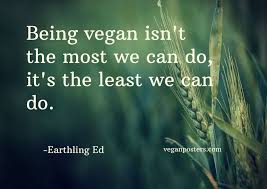
If you know about the problems, and you understand the solutions, you have a moral duty to do something about it. That can take different forms, but we must all contribute. Being vegan is not the most we can do. It is the very least.
Follow Carl on FB
Carl’s Youtube Channel