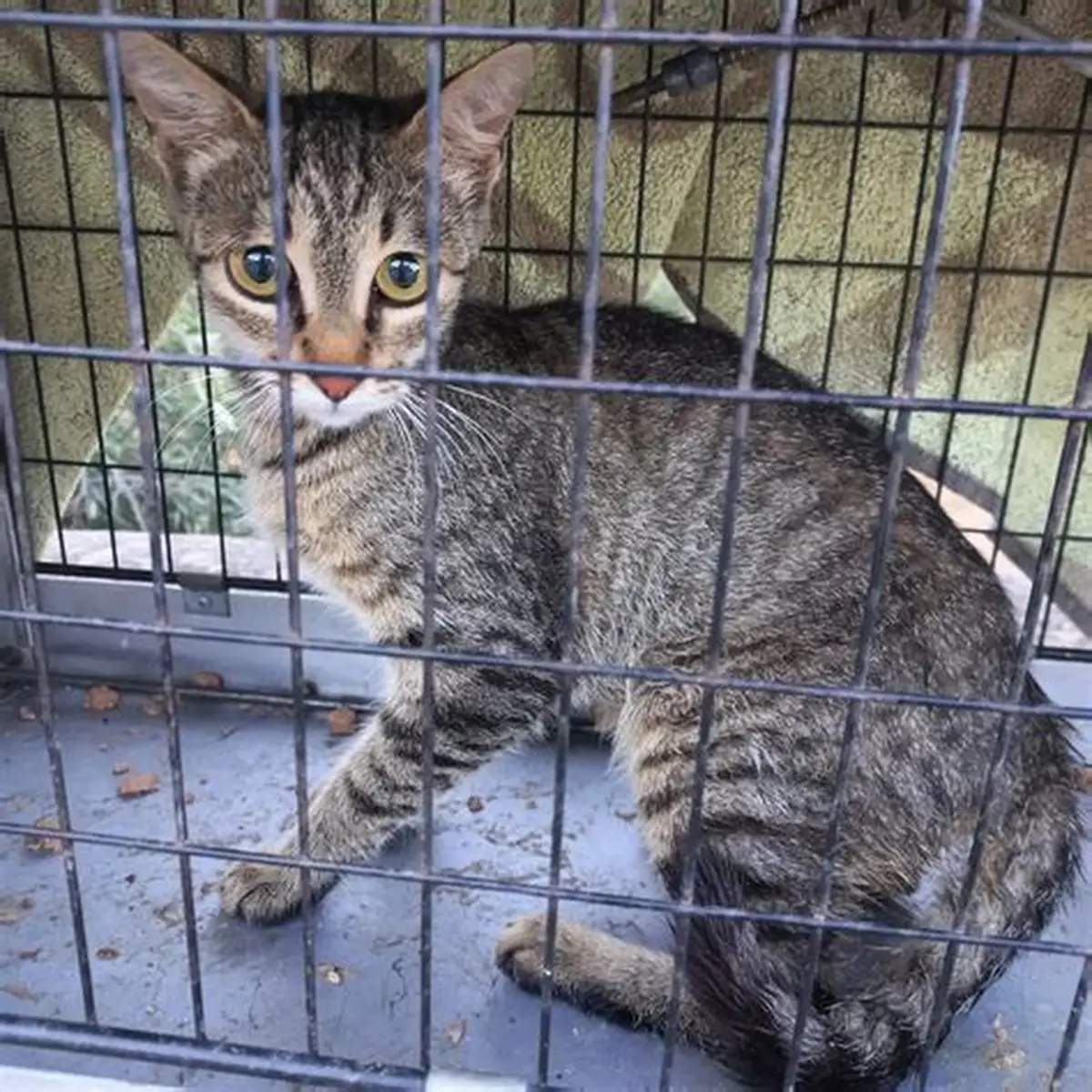
New Zealand has declared war on ‘feral’ cats. They are now part of the Predator Free 2050 Programme, a government initiative aiming to eliminate introduced predators from New Zealand by the year 2050 — specifically rats, possums, stoats, and now cats. The stated aim of PF2050 is to protect native birds, bats, lizards, and other wildlife.
Local governments fund traps that can be set in the back yard of the family home. All over the country children and little old ladies keen to save native birds are setting rat traps which are designed to have a spring-loaded bar snap down across the animal to break its neck or spine. An outright kill is not guaranteed, and the rat can be left in agony for hours, even days. These traps are patently cruel to sentient beings.
All of the animals targeted by PF2050 are fully sentient. The much-maligned rat, for example, is a highly intelligent mammal. Rats can learn complex mazes, use tools, recognise and remember individual humans, exhibit empathy, “laugh” when tickled or at play, and show regret-like behaviour when they make a bad choice. It’s not hard to see why researchers use them as models for human cognition and emotion.
And now it’s the cat’s turn to be officially designated a ‘pest.’ A ‘feral’ cat is not a different species from the adorable, enigmatic creature purring on someone’s lap. She is the same sentient being, with the same nervous system registering the same fear, the same cold, the same hunger. And she didn’t become feral by accident.
Every cat living rough is the end of a chain that starts with a human decision — an unfixed cat let outdoors, a family that moved and didn’t take the pet, a breeder who kept churning out kittens for a market already full. The so-called feral cat population is a direct, entirely foreseeable consequence of human carelessness. If we’re hunting for the real pest in this story, the mirror is the place to look.
Quite apart from the ethics of it, the cat-culling programme is doomed from the outset. You can shoot, trap and poison your way through a colony, and the vacuum you leave behind will refill — because the underlying supply lines are untouched. Desexed cats don’t breed; unsupervised, unfixed ones do. Owners keep letting cats roam at night, when most of the hunting and breeding happens. Culling treats the symptom but leaves the cause fully operational.
The actual solutions are neither mysterious nor cruel, and we already know they work. Trap-Neuter-Return, done properly and consistently, shrinks populations over time without the endless, ineffective cruelty of lethal control. Mandatory desexing of owned cats will close the supply line at its source.
Keeping domestic cats inside at night — which so many devoted owners already do — protects wildlife, as well as the very cat you love. It’s a small act of care that keeps her safe, warm, and exactly where she belongs — curled up at home, waiting for you.
If we’re serious about the wildlife Predator Free 2050 claims to protect, we need to be serious about the actual cause. In the “cat problem,” it’s becoming clearer by the day who the real pest is.

Sandra Kyle is the editor of May Safely Graze

