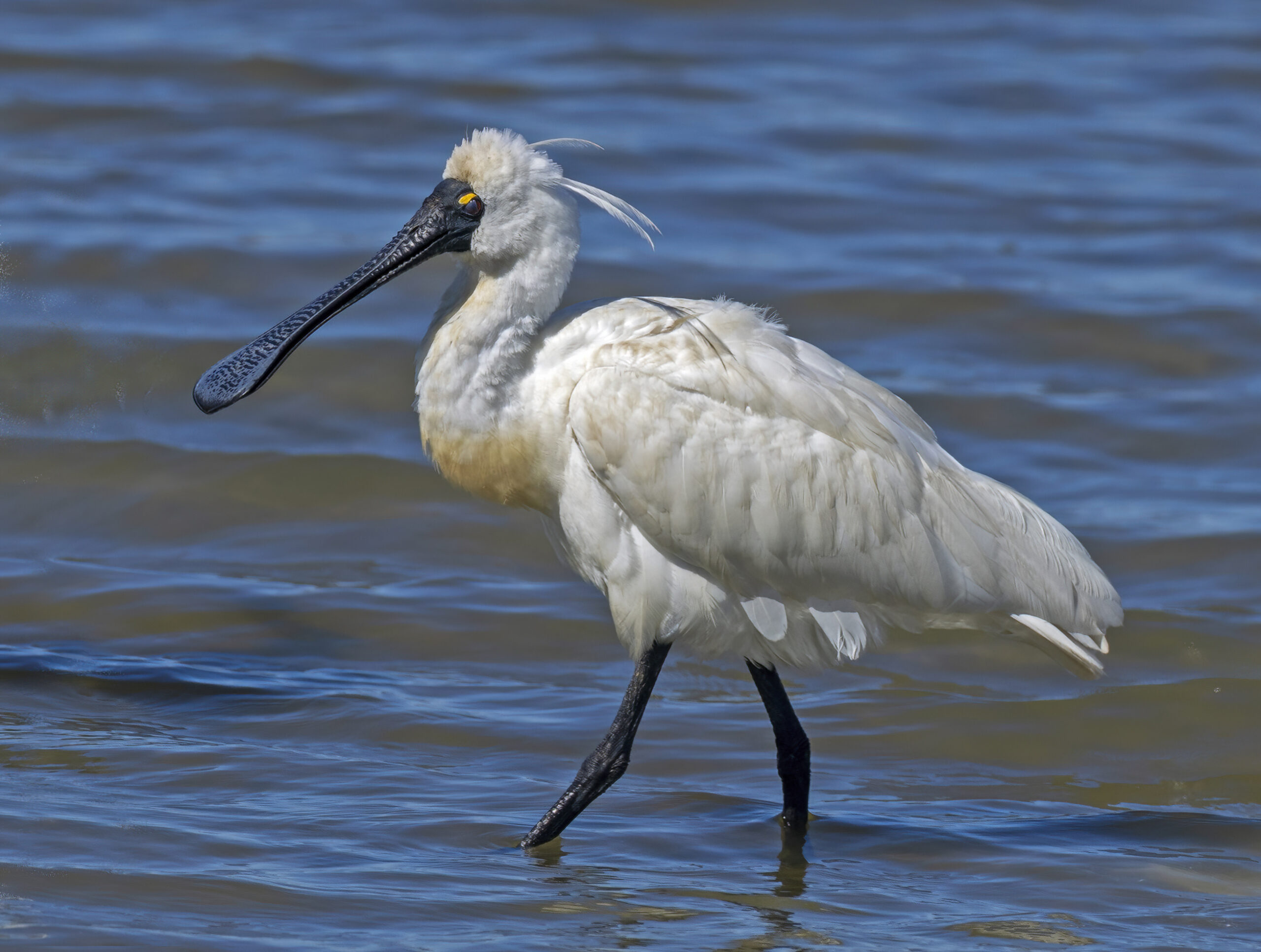
Among the wondrous and quirky creatures of planet Earth and of New Zealand in particular, there’s a conspicuous Dr Suess-like animal that is increasing in number and visibility.
The first royal spoonbill in Aotearoa-New Zealand was recorded in 1861, at Castlepoint. It wasn’t until 1949 that they were recorded breeding, next to the white heron colony, at Okarito, in South Westland. Birds of a feather flock together, and look alike, and royal spoonbill, Kōtuku-ngutupapa, translates as ‘white heron with a flat bill’.
Their nearest relatives however, are the ibis, and they have a similar stature and form. They have long black legs, with a big round body, with beautiful white feathers. In the breeding season they grow long crown feathers which they raise in mating displays. If there was a competition for quirkiest bird beaks, spoonbills would win, though their cousins the ibises come close.
The spoonbill bill is up to 220mm long, and flat at the end, as much like a wooden spoon or ladle as a dessert spoon. They use the beak to ‘scythe’ through shallow water, catching fish, shrimp, flounders, crustaceans and frogs. They can sense when they catch a creature and snap their bills shut and tip their heads back to let the food slide down their long throats. They can also actively grab or probe for food with their bills.
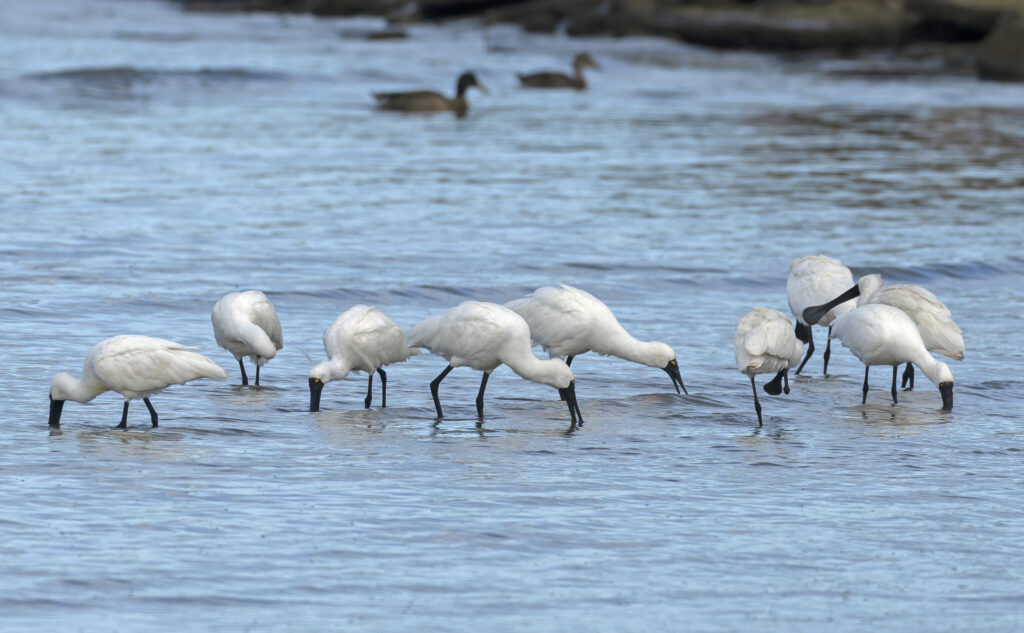
They are now well established here, with colonies at different sites around both the North and South Islands, from Bluff to Huntly. They congregate around the coast to breed, and disperse to wetlands and estuaries around the country once breeding has finished. At the last count, in 2024-25, there were 4593 spoonbills in 36 colonies across NZ. That is around double the colonies and double the number of birds from the 2012-13 count, though there were fewer nests in each colony most recently.
And that’s why you may have seen some up the Matakana river, at Sandspit, in Mahurangi, and why there are flocks at Western Springs in Auckland, and at Ambury Farm Park and the Watercare Walkway near Mangere.
They’re also distinctive fliers, partly because of their size, travelling in a V, and in circular or figure 8 formation during courtship displays. During mating season, bachelors gather together and spar, with their bills open and wings and necks out. After mates are chosen they greet each other with a little dance ducking their open bills and mutually preening. They’re pretty flexible with their nesting, in bowl shaped nests made of sticks and lined with leaves, over water in trees or in wetland reeds.
They’re also quite vocal, with, according to Birds NZ, “a range of grunts, groans and hisses, and “chew” and “cho” sounds made on the nest”.
Fears for species and biodiversity loss are valid. Royal spoonbills are also threatened by land use change and wetland destruction. But it’s heartening to know that these creatures, in their big and conspicuous ways, are doing weirdly well.
Photos of Whanganui spoonbills taken by renowned birder and photographer Paul Gibson. Upics.co.nz – Photography By Paul Gibson
Christine Rose is a former Councillor for the Rodney District Council and the Auckland Regional Council, and was lead climate and agriculture campaigner for Greenpeace. A long time campaigner for the oceans, forests, and creatures of our planet, 25 years ago she founded, and has since run, the Māui and Hector’s Dolphin Defenders organization. Christine is a potter and painter, and says ‘I use art and politics to shape a better world.’

