by Dr Lynley Tulloch
In this article, Dr Tulloch examines the Great Possum Cull, a family-themed hunt planned for this November in South Kaipara, which includes a prize for the "most well-endowed" possum, judged by the size of his testicles. She argues that events like this send troubling messages to children about which animals deserve compassion and which can be mocked. Drawing on the concept of compassionate conservation, she states we can protect native wildlife without relentlessly killing animals deemed as pests, and turning their suffering into crude entertainment.
Another family-themed possum hunt is coming to Aotearoa New Zealand this November.
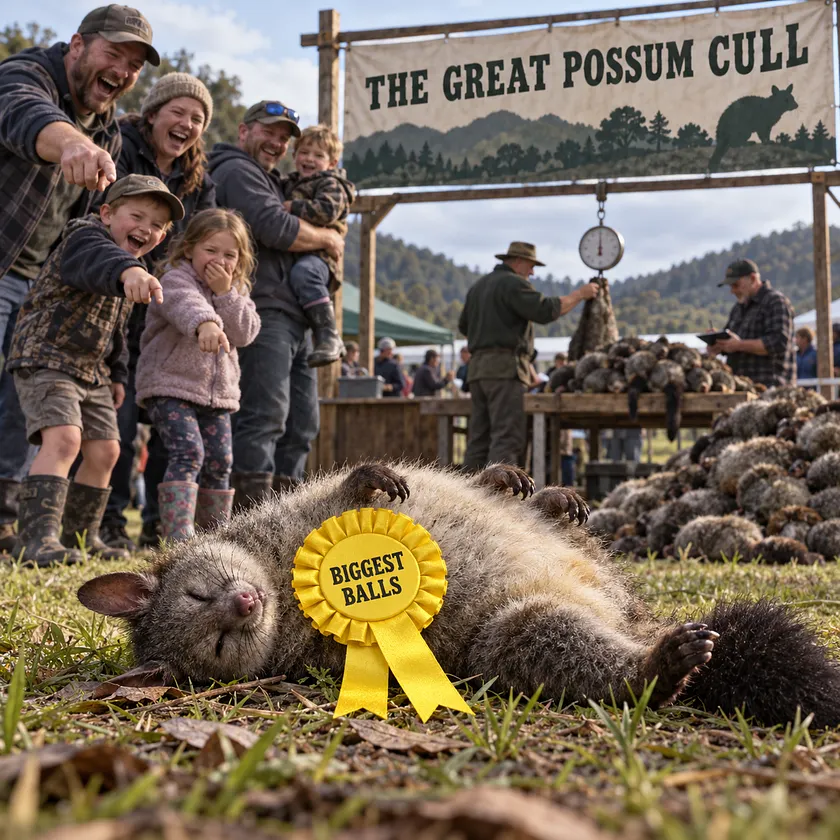
The Great Possum Cull, organised by South Kaipara Landcare, invites families and the wider community to hunt or trap possums over three days, with proceeds donated to Waioneke School. The organisers describe the event as an opportunity to protect native wildlife, work together and win prizes.
But look more closely at those prizes.
Alongside categories for the longest possum, the heaviest possum and the greatest number killed is one for the most well-endowed possum, determined by the size of his testicles. The event invites participants (and families are encouraged) to bring the animals they have killed to a public weigh-in and prizegiving.
Even if we disagree about whether possums should be killed in the first place, surely we should be concerned about the messages these events convey to children.
This is not an isolated example. In 2017, the drowning of baby possums at a Drury School fundraising hunt prompted public outrage and an investigation by the Ministry for Primary Industries. More recently, the Tainui Pig Hunting Club advertised a Kids Critter Comp featuring a best-dressed possum competition, open to children from birth to 13 years of age.
I care deeply about Aotearoa's native wildlife. I also care about the suffering inflicted on possums and the ways we teach children to regard animals whose lives we have decided are unwanted. Turning an animal's body into a punchline raises questions that extend well beyond conservation.
Consider the lesson for a child at that prizegiving. Adults have identified a group of animals as unwanted. They count their dead bodies, compare their sizes and laugh at one animal's genitals. The possum, dead or alive, is unaware of the joke. But the children can hear the joke.
They are watching adults demonstrate which lives deserve care, which can be treated with contempt and when joining in the laughter is rewarded. They are learning to fit into a bullying culture.
The sexualisation of the possum adds another troubling dimension. His genitals become the focus of public attention, humour and ridicule. A dead animal's body is transformed into a sexualised spectacle. This normalises a gendered form of body-shaming in which vulnerability becomes entertainment and empathy is suspended because the body belongs to an animal labelled a pest.
I am not suggesting that attending a possum hunt causes a child to become a bully. Bullyinghas many causes. The connection I am asking us to consider is how adults model behaviour and what this communicates about our treatment of those we consider different, unwanted or undeserving of compassion.
This question matters in a country where bullying is already a serious concern. In the OECD's 2018 PISA survey, 32% of New Zealand's 15-year-old students reported experiencing bullying at least a few times a month, compared with an OECD average of 23%.
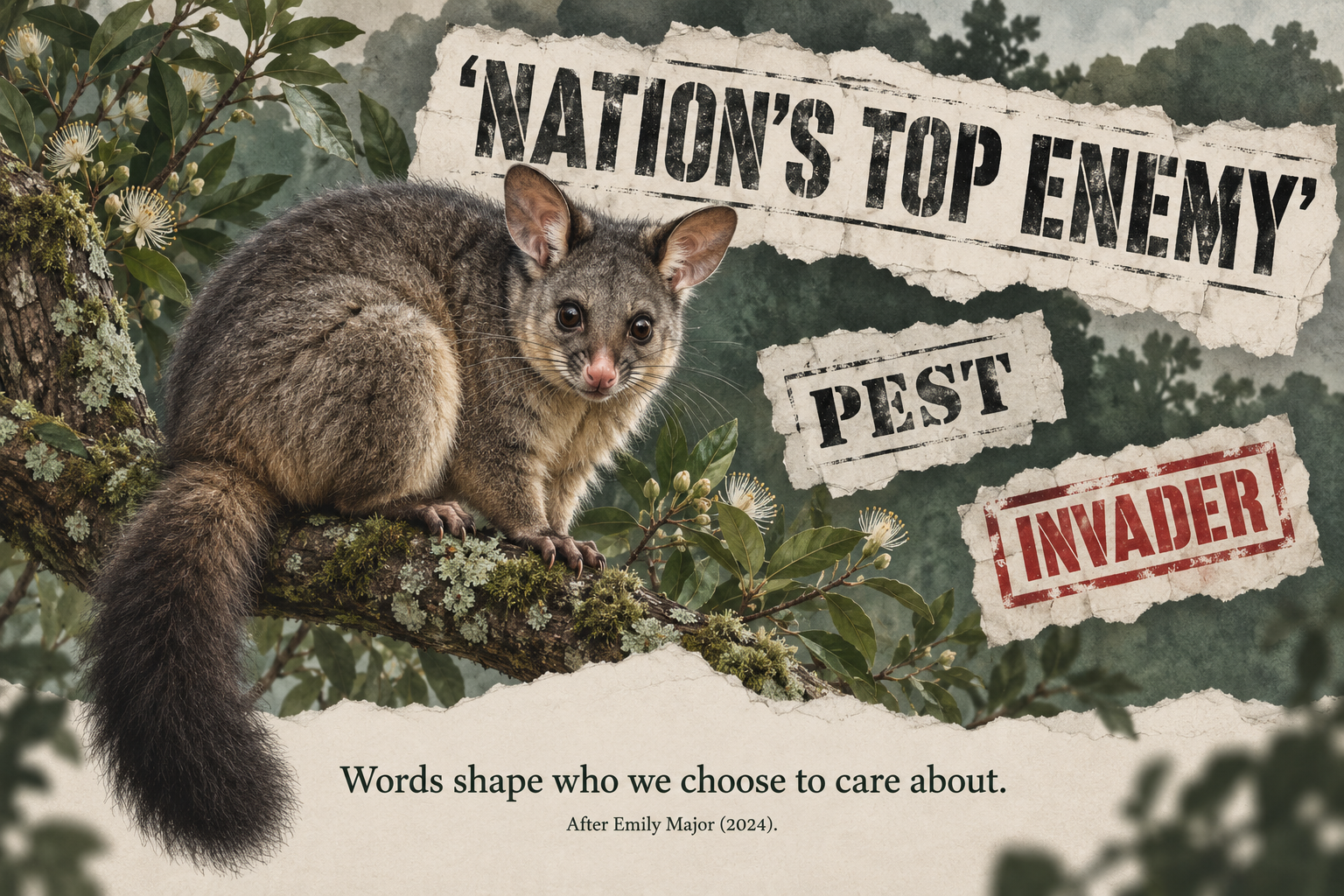
Bullying is not always a physical confrontation. It can involve exclusion, teasing, humiliation, or a group deciding that someone else's difference is funny. Adults recognise these patterns in schools and workplaces. Yet when we speak about animals labelled as “pests”, we often excuse comparable attitudes: the label replaces the individual, ridicule creates a sense of belonging among the onlookers, and empathy is dismissed as naïve.
Possums are sentient beings, capable of experiencing pain and distress. Their status as introduced animals does not erase their capacity to suffer. Nor does caring about possums mean abandoning our responsibility to protect native wildlife.
We can take ecological damage seriously while questioning whether killing competitions, public displays of dead animals and prizes for their body parts are appropriate ways to involve children in conservation.
Compassionate conservation asks us to consider the interests of both native wildlife and individual possums. It encourages investment in habitat restoration, prevention, non-lethal approaches where effective, and ways of reducing ecological harm without treating animal suffering as entertainment.
There is also a distinction between explaining ecological challenges to children and inviting them to celebrate the deaths of animals. We can teach children about biodiversity, introduced species and the complex history of environmental change in Aotearoa without encouraging derision towards the animals themselves.
Is a prize for the biggest testicles teaching respect for nature? Does laughing at a dead animal help a child become a thoughtful and compassionate person?
Children learn compassion from what adults do when compassion is inconvenient. If we want them to reject bullying and body-shaming, we should show them that dignity is more than a rule we apply only to those we already value.