Thea and Bobby, by Danette Wareta
Posted on December 23, 2025
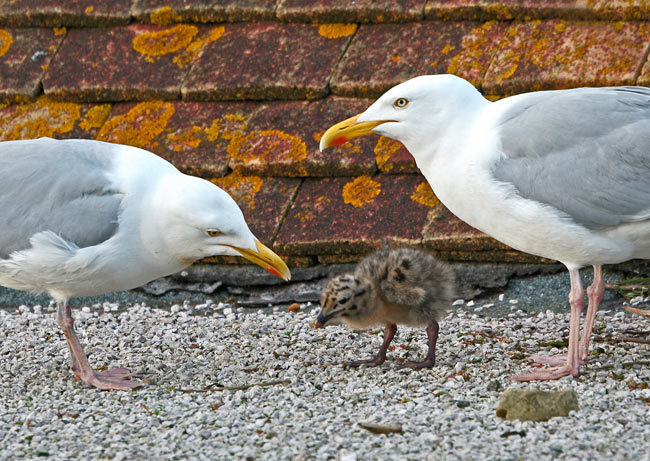
In this sensitive and heartfelt blog, May Safely Graze Contributor Danette Wereta recounts how she attempted to rescue a young seagull, and a Paradise duck.
It’s been a hard week for rescues. Even though I know I did the right thing, and I know the birds are no longer suffering, I still feel an overwhelming sense of guilt, as if I took them to their death. Some say it is an honour to support animals at the end of their lives, but that doesn’t make the crushing sadness you’re left with any easier.
On the way to the library this week, which is right on the beach in New Brighton here in Christchurch, I saw a family eating hot chips. The kids were chasing the seagulls, which always seems to annoy me. I was already frowning at them when they called out, “Look, look mum, that bird has a chip stuck.”
I looked over and the seagull seemed to have a chip stuck on the side of her neck. She looked in bad shape with dirty, ruffled feathers, many of them missing. I went over and while I couldn’t get a good look, I assumed it was some type of fishing equipment, the issue for a few rescues lately. (Don’t get me started on this!) I told the family to keep an eye on the bird and raced home to get my gear.
In five minutes I was back on the scene. I asked the family if they wanted to help me. It’s always incredible to see the community come together to help an animal. Most people want to get involved and it gives them such a positive feeling, an experience they hold onto. What’s more, I’m sure it changes the way they see animals, even if they already love them.
The gull was in bad shape but could still fly a little. Normally gulls aren’t too difficult to catch as they are food-driven. I asked the mum to throw some food and distract her while I worked my way behind to drop a net. But this wee girl was wary, and after a few unsuccessful attempts I wasn’t sure what my game plan was anymore.
Then, with some luck on my side, she moved against a wall. I asked all the kids to run down the side and help me block her in. I was able to get her in my net, and the kids held her safely contained while I brought back my cage.
At the first vets I visited they said the only thing they would do was put her to sleep. It’s of great sadness to me that we humans cause so much pain and suffering to wildlife, and yet, if they’re not natives, we won’t help them when they’re in need. Unwilling to give up so easily, I bundled her back into the car and we drove to another vet, who said they would treat her.
The vet showed me her injury, a large and very nasty hole in her neck. She was badly wounded, yet as I held her I could feel her gentle energy. She was still very young. The vet promised they would do what they could for her, but sadly, the little seagull was unable to survive.
I always name each animal I try to rescue, and Thea – which means divine – is the name I chose for her. Fly free, Thea. I’m sorry for your suffering and I’m sorry I was unable to save you.

A few days later I met Bobby. I was off to meet my friend Jess, who carries out many rescues with me. On the way, I spied a paradise shelduck, pūtangitangi, a goose-like duck endemic to New Zealand who was sitting up on the riverbank. Nothing seemed amiss, he was just sitting there, quite a normal sight. Suddenly I had a weird feeling, so strong I couldn’t shake it. I dropped Jess a quick message to say I’d be late, and went back to check the duck. I assumed he would stand up and walk off as soon as I approached, which is what a healthy duck would do. I was relieved when he got up, and thought I was just being silly. But after he took a few steps and I saw his dropped wing, my heart dropped too.
I connected with Jess and we came back to help him, but he was gone. We made plans to try the next day, and met up at the lake at 6pm. Fortunately he was a paradise duck, so the wildlife hospital would treat him. Natives have it much better than non-natives. I organised everything in advance, and with wheels in motion we began the rescue.
But the drake was super wary and undoubtedly in a lot of pain. There was very little distance between the small riverbank and the water, making it difficult for us to cut him off from the water. What’s more, the road was close with traffic whizzing by, terrible conditions for a rescue of this kind.
We gave it a few attempts, waiting patiently between each one for him to return.
Normally a rescue like this takes a few people owing to the complexity, but it was only Jess and me. Even though I didn’t think it would work, I left Jess to keep an eye on him, then went home and grabbed one of the kayaks I got off Trade Me to carry out my rescues. I returned and pushed the kayak into the water aiming to move him back up onto land so he could be netted. But with only Jess on the riverbank and me in the water, I had my doubts we would be successful.
I slowly applied pressure, trying to get the drake to exit the water, but couldn’t manage it. Ducks are so smart, and paradise ducks seem to be extra smart. I was exhausted, and to make matters worse, he kept changing directions quickly. Trying to keep up with him I turned the kayak abruptly – and promptly tipped out into the water.
Fully clothed, in old hiking boots, I flapped around as Jess laughed and waka ama teams rowing passed looked amused at me executing the perfect flail! Finally back in the kayak we continued with Plan A, but still couldn’t get him. We decided it was time to move to Plan B.
I took the massive net and tried to manovre the kayak with the paddle at the same time. It was very hard, and the duck started diving under the water when I got too close. Soon he was waterlogged and sinking. Every time he went under, my heart dropped. Am I just making things worse? Jess was coordinating all this from the riverbank, which must have been very stressful for her also.
We were now in a really tough position. I couldn’t get him, and he was in danger. Cold, waterlogged, and likely in a lot of pain. At the moment the waka ama team came back, and I shouted to them, asking for their help. Using their kayaks, we cornered him up a bank. The poor boy was in bad, bad shape. I jumped out of my kayak, abandoning it in the river, and swam after him and up the bank, where I was finally able to get him. He was cold and struggling. I held him close, and told him how sorry I was.
Jess jumped in the car and raced around the other side of the river, then came running with the cage. We carefully got him in, and rushed him to the vet in a warm car, which was good for me too, as I was soaking wet and shivering.
The vet said the injury was so bad, with a bone exposed and infection that had been there too long, that he needed to be put to sleep. Sad and disappointed, we said our goodbyes to the boy, and I sent him loving energy. I named him Bobby, which means ‘shining glory.’ He was quiet, reserved, smart, and wise, with energy very different to young Thea’s.
Some days later I’m still processing his death. Bobby was likely hit by a car. Such a large duck, maybe it was an accident, but most people can avoid potholes successfully, I wondered if this was yet anothera case wilfully mowing an animal down.
As I write I imagine Bobby flying in a warm, soft field filled with golden light, and a beautiful sparkling river weaving through it. His family saw what happened, so I have been back to sit with them by the river, and tell them how sorry I am.
Sending love to you Thea and Bobby. Your lives mattered. Your wings may be still, but your spirit soars on.
Comments
Leave a Reply
← NEXT


Emere McDonald says:
Kia ora Danette A Beautiful story! Yes, when a rescue dies you do feel awful! A year ago, I felt that way when I rescued a pigeon, Anahera and she had an angelic energy. I also grieved for her!
Ngā mihi nui
Sandra Kyle says:
Pigeons are maligned by many, but they are a remarkable animal. Thankyou for your kindness and compassion to all animals Emere. xx